
01
You pay once
Find the leak and fix it, and the gas stays where it belongs. That's the end of the annual top-up cycle.
Home/Services/Regassing & leak repair
Regassing & leak repair
Topping up a leaking system is a way of paying for the same fault every summer. We pressure-test, find the leak, repair it, and then regas — in that order, so you only pay once.
Leak found firstThen repaired, then refilled
SAQCC registeredLegally required to handle refrigerant
Nitrogen pressure testThe honest way to find a leak
Overview
Here is the thing every aircon owner should know and almost nobody is told: a refrigerant circuit is sealed. It does not consume gas. It does not burn it, evaporate it, or use it up. The same charge should still be in there in fifteen years.
So when a company tells you your unit "needs a top-up", what they are actually telling you — whether they realise it or not — is that your system has a leak and they haven't looked for it. Top it up and it will work beautifully for a season. Then you'll phone them again next summer, and they'll charge you again.
We won't do that. If your unit is low on gas, we find out where it's going first. Sometimes that's a five-minute conversation and a small repair. Occasionally it's bad news about a corroded coil. Either way, you'll know the truth rather than paying an annual subscription for someone else's negligence.
In detail
There is a proper method for this, and it doesn't involve guessing.
We pump the system up with dry nitrogen and watch the pressure. A system that holds is sealed. A system that drops is leaking, and the rate of drop tells us roughly how big the hole is. Nitrogen is inert, dry, and cheap — and unlike refrigerant, releasing it harms nothing.
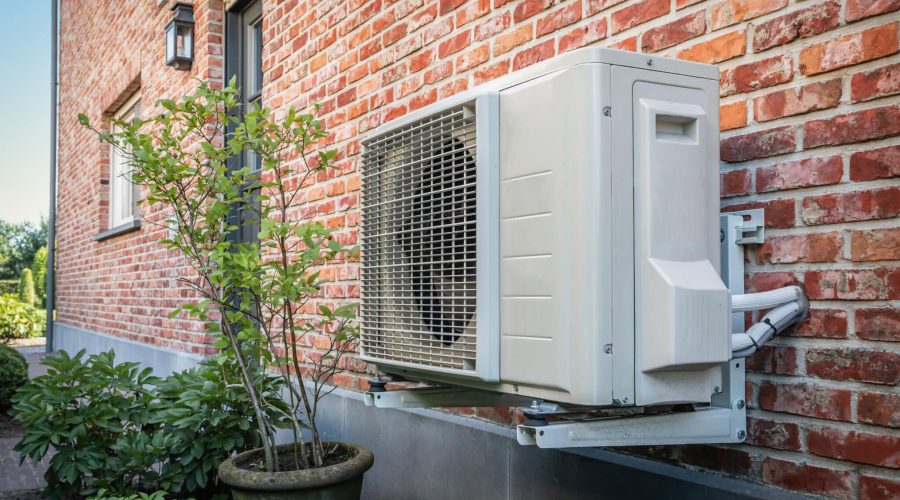
The usual suspects, in order: the flare joints where the pipework meets the units (poorly made flares are the single most common cause and are almost always an installation fault), the schrader valve cores, the brazed joints, and the coils themselves. Electronic leak detectors, bubble solution and UV dye all have their place depending on what the pressure test is telling us.
A bad flare gets remade. A schrader core gets replaced. A pinhole in a copper line gets cut out and brazed. A corroded evaporator or condenser coil is the expensive one — and on an older unit, it's frequently the point at which replacement becomes the sensible answer. We'll tell you if that's where you are.
Once it's sealed, we pull the system into a deep vacuum. This boils off any moisture that got in while the circuit was open — and moisture in a refrigerant circuit forms acid, which quietly eats compressors from the inside. Skipping the vacuum is one of the great invisible sins of this trade. Then we weigh in the exact charge the manufacturer specifies, rather than eyeballing the gauge.
Benefits
Refilling a leaking system is faster and cheaper for us. It just isn't right.
01
Find the leak and fix it, and the gas stays where it belongs. That's the end of the annual top-up cycle.
02
Running low on refrigerant starves the compressor of cooling and lubrication. That's how a R900 leak becomes a R9 000 compressor.
03
Not guessed off a gauge on a hot day. Over- and under-charging both wreck efficiency and shorten life.
04
The vacuum step boils off water that would otherwise turn to acid inside the system. It's invisible, it's essential, and it gets skipped constantly.
05
Venting refrigerant to atmosphere is both illegal and environmentally serious. Our technicians are SAQCC registered.
06
If the leak is in a corroded coil on a twelve-year-old machine, we'll tell you to replace rather than sell you a repair that won't last.
What's included
The full method — not a cylinder, a gauge and five minutes.
Nitrogen pressure testHeld under pressure and monitored properly
Leak tracingFlares, valves, brazed joints and coils
Repair of the leak foundRemade flares, new cores, brazed pinholes
Deep vacuumBoils off moisture before the gas goes back in
Weighed refrigerant chargeTo the manufacturer's exact specification
Performance verificationTemperature differential checked before we leave
Why us for this
If you have paid for refrigerant more than once on the same unit, you have been sold the same fault twice. That is not bad luck. It's a diagnosis that was never made.
We see it constantly — usually on units two or three years old, where a flare was never made properly at installation and has been weeping gas ever since. Fifteen minutes with a spanner and a flaring tool would have solved it permanently on day one.
We look before we fillNitrogen test first, cylinder second
We'll show you the leakBubble solution or dye — you'll see it yourself
Honest about coil leaksWhen it's time to replace, we say so
Registered and accountableLegal handling, documented, guaranteed
Our process
Usually a single visit, unless the leak turns out to be in a coil.
01
Poor cooling, ice on the pipework, or a unit that's needed gas before — all point the same way.
02
Nitrogen in, pressure monitored. This tells us definitively whether you have a leak and roughly how big.
03
We trace it to the joint, valve or coil, and repair it — quoting you first if it's more than a flare remake.
04
Deep vacuum to remove moisture, then the exact weighed charge, then a performance test with you present.
My aircon needed gas every single summer. They pressure-tested it, found a bad joint on the outdoor unit, remade it and regassed once. Two years later it hasn't lost a thing.
FAQs
What it costs, how often it should happen, and why the answer is 'almost never'.
Phone us, or send a photo of the unit on WhatsApp. We answer questions without charging for the privilege.
Ask us a questionIdeally never. A sealed system holds its charge for the life of the unit. If yours needs regassing, it has a leak — and the correct response is to find the leak, not to keep refilling it.
It depends on the refrigerant type and the size of the charge, and the leak repair is quoted separately once we know what we're dealing with. You'll have a fixed written number before we start. What we won't do is quote you a cheap top-up and stay quiet about the hole.
We can, and occasionally on a very old unit that's due for replacement it's a defensible stopgap — but we'll tell you plainly that's what it is. Doing it as a matter of course means you pay again next year and the refrigerant goes into the atmosphere.
They're different refrigerants with different pressures and properties, and they're not interchangeable. R22 is being phased out globally and is increasingly expensive and hard to source — if your unit runs on R22, that's a significant factor in the repair-versus-replace decision, and we'll walk you through it.
The refrigerant itself isn't a danger to you in a domestic setting, but running a system that's low on gas will destroy the compressor — the most expensive component in the machine. It's also an environmental issue, which is why registration is legally required to handle it.
A pressure test and simple flare repair is usually a single visit. If the leak is inside a coil, we'll need to quote you on a coil replacement or advise you honestly that the unit has reached the end of its life.
Related services
Next step
Let us pressure-test it properly. If there's a leak we'll find it, show it to you, and fix it — so this is the last time you pay for refrigerant.
Fixed pricing · Same-day callouts across Johannesburg and the wider Gauteng
Contact
Tell us whether you've had it regassed before, and roughly when. That alone tells us a great deal about what we're going to find.