01
A room that's cool and dry
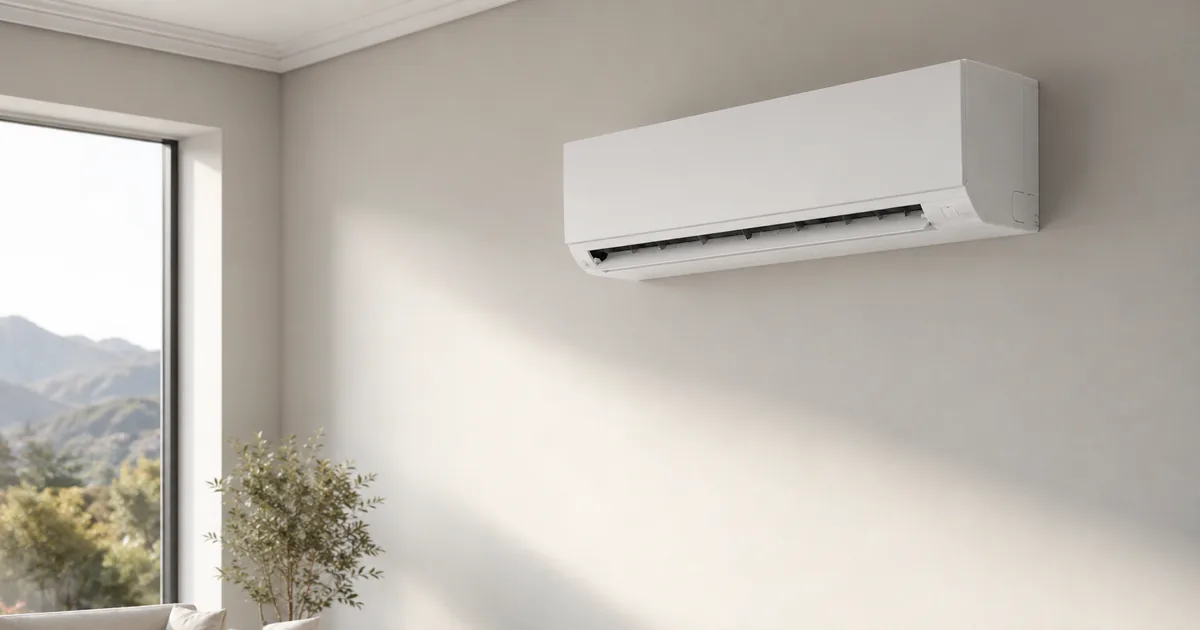
Correct sizing means the unit runs long enough to dehumidify, not just chill. That's the difference between comfortable and clammy.
Home/Services/Aircon installation
Aircon installation
Get the sizing wrong and you'll either sit in a cold, clammy room or run the compressor to death. We measure, we calculate, we recommend honestly — and then we install it so cleanly you'll struggle to see where the pipework runs.
Free on-site assessmentMeasured before we recommend
2-year workmanship guaranteePlus manufacturer warranty intact
Usually one day per unitBooked within 3–5 working days
Overview
Almost every bad aircon experience in South Africa traces back to a unit that was the wrong size for the room it was put in. Usually too big, because bigger sounds safer and because it's easier to sell.
An oversized unit cools the air fast, hits the setpoint, and shuts down before it has pulled any moisture out of the room. You end up cold and clammy, the compressor short-cycles — starting and stopping constantly, which is the hardest thing you can ask of it — and the machine dies years early.
An undersized unit runs flat out and never quite gets there, which is equally fatal, just more slowly.
So we measure. Floor area, ceiling height, window orientation, glazing, insulation, how many people are usually in the room, and whether there's a fridge or a wall of computers adding heat. Then we recommend. It takes twenty minutes and it decides the next fifteen years.
In detail
There's no mystery to it — just arithmetic that many installers skip.
The rough starting point is 600–650 BTU per square metre for a typical insulated room. That number then moves. A west-facing wall of glass in Johannesburg takes a beating from three in the afternoon onwards and needs more capacity. A high ceiling means more air volume. A room full of people, or a home office with three monitors, is adding heat all day.
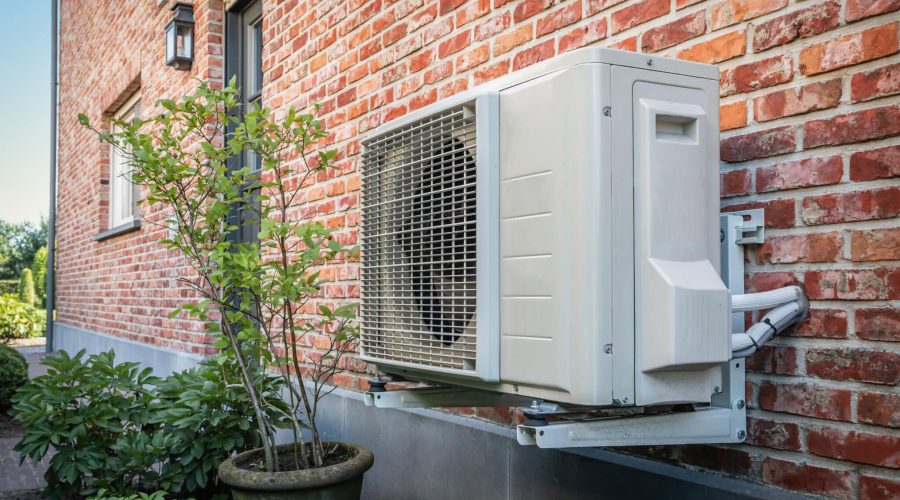
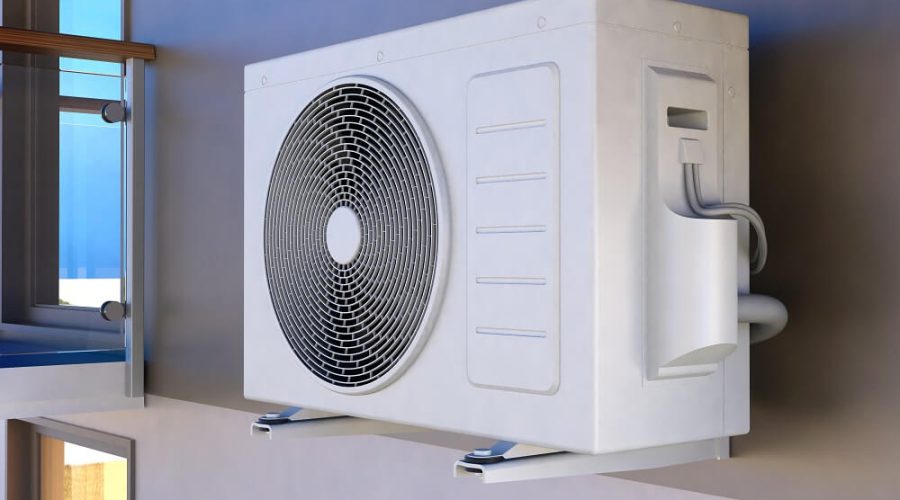
The condenser needs airflow and it needs to be reachable for servicing. Boxed into a tight courtyard with no clearance, it recirculates its own hot air and struggles. We'll tell you where it should go, and if the only viable spot is somewhere you'd rather it wasn't, we'll say that too instead of finding out on installation day.
The distance between the indoor and outdoor units affects both the price and the performance. Long runs need more refrigerant and careful attention to oil return. We'd rather have this conversation at quoting stage than surprise you with it halfway through.
Inverter or non-inverter, brand, and features. Not the other way around.
| Room | Typical size | Usual capacity |
|---|---|---|
| Small bedroom | 12–15 m² | 9 000 BTU |
| Main bedroom | 15–18 m² | 9 000 – 12 000 BTU |
| Living room | 20–28 m² | 12 000 – 18 000 BTU |
| Open-plan lounge / dining | 30–40 m² | 18 000 – 24 000 BTU |
| Small office | 15–20 m² | 12 000 BTU |
Guidance only. West-facing glazing, high ceilings, poor insulation or heavy occupancy all push the requirement up. We measure on site before recommending anything.
Benefits
Most of the value in an installation is invisible. That's exactly why it gets skipped.
01
Correct sizing means the unit runs long enough to dehumidify, not just chill. That's the difference between comfortable and clammy.
02
An inverter that's correctly sized modulates gently instead of hammering on and off. It's the single biggest lever on your monthly bill.
03
Every unit we install is a heat pump. It moves heat rather than generating it, which makes it cheaper to run than any bar heater in the house.
04
Chased into the wall or trunked in straight, level runs. Not a snake of white plastic wandering diagonally across your feature wall.
05
Registered installers, correct commissioning, and the paperwork handed to you. Unregistered installs can void the cover on a brand-new machine.
06
Flares made properly, torqued correctly, pressure-tested and vacuumed before charging. This is where cheap installations quietly fail.
What's included
Supply, fit, commission, hand over. No line items appearing at the end.
Free on-site assessmentWe measure and calculate before we quote
Unit supply and deliveryOr fit a unit you've bought yourself, if you prefer
Full installationBrackets, pipework, drain, electrical connection
Pressure test and vacuumThe step cheap installers skip — and the reason theirs leak
Commissioning and handoverRun up, temperatures verified, controls explained
2-year workmanship guaranteeIn writing, alongside your manufacturer warranty
Why us for this
You can judge a paint job by looking at it. You cannot judge an aircon installation by looking at it, which is precisely why the corners get cut there.
Whether the flares were made and torqued properly. Whether the system was pressure-tested and pulled into vacuum before the gas went in. Whether the drain has a consistent fall. Whether the bracket is anchored into brick or into plaster. None of that is visible on handover day — all of it decides whether you're phoning someone in two years.
Pressure test and vacuum, alwaysMoisture left in a system destroys compressors slowly
Brackets anchored properlyInto structure, not into plaster and hope
Neat, level pipe runsTrunked or chased, never draped across a wall
Correct drain fallSo it drains outside, not into your ceiling
Our process
Typically one working day per unit, booked within three to five days.
01
We measure the room, look at where the outdoor unit can live, and check the pipe run and electrical supply.
02
Capacity, inverter or not, brand options and a fixed written price. Including the option of buying the unit yourself.
03
Drop sheets down, brackets fitted, pipework run neatly, system pressure-tested and vacuumed, then charged.
04
We run it up with you, verify the temperature drop, explain the controls, and hand over the guarantee and paperwork.
They told me my old unit wasn't worth repairing and quoted me on a replacement — but they also told me what it would cost if I bought the unit myself. Who does that?
FAQs
Cost, sizing, brands and what a good installation looks like.
Phone us, or send a photo of the unit on WhatsApp. We answer questions without charging for the privilege.
Ask us a questionBudget roughly R9 000–R25 000 for the unit itself and R2 500–R5 000 for a straightforward installation. Unit price moves with capacity, brand and inverter type. Installation price moves with the pipe run, how the pipework must be routed, and how the outdoor unit needs to be mounted. Our assessment and quote are free, and the quote is the price.
Roughly 600–650 BTU per square metre as a starting point, adjusted upward for west-facing glass, high ceilings or heavy occupancy. A 15–18m² bedroom typically wants 9 000 BTU, a 25m² room 12 000 BTU, a 35m² open-plan lounge 18 000 BTU. We measure before recommending — it's the most important decision in the job.
No. An oversized unit short-cycles, never dehumidifies properly, is louder, costs more to buy, and fails earlier. Correct beats big every time.
For any room you use regularly, buy the inverter. It varies compressor speed rather than slamming on and off, so it's quieter, holds temperature better and uses noticeably less electricity. It costs more upfront and pays that back over a few seasons.
Yes. We'll fit a unit you've sourced and guarantee our workmanship on it. We'll also tell you honestly before you buy whether the model and capacity you've chosen suits the room.
Not with us — our technicians are SAQCC Gas registered and you get the paperwork. It's an unregistered installation that voids manufacturer cover, which is the risk with the cheapest quote in your inbox.
Usually one working day per unit for a standard residential split. Complicated pipe routing, multiple units or ducted work take longer, and we'll tell you upfront rather than on the day.
Related services
Next step
The on-site assessment is free, takes twenty minutes, and is the difference between fifteen good years and a machine that dies at seven.
Fixed pricing · Same-day callouts across Johannesburg and the wider Gauteng
Contact
Tell us the room and we'll tell you the capacity. Free on-site assessment, no obligation, no pressure at the end of it.